
Whether you are in the aerospace, automotive, medical, or general engineering sector, our facility is equipped to handle a wide range of alloys and intricate geometries.
Our facility follows a rigorous, multi-stage production line to ensure every part meets international quality standards.
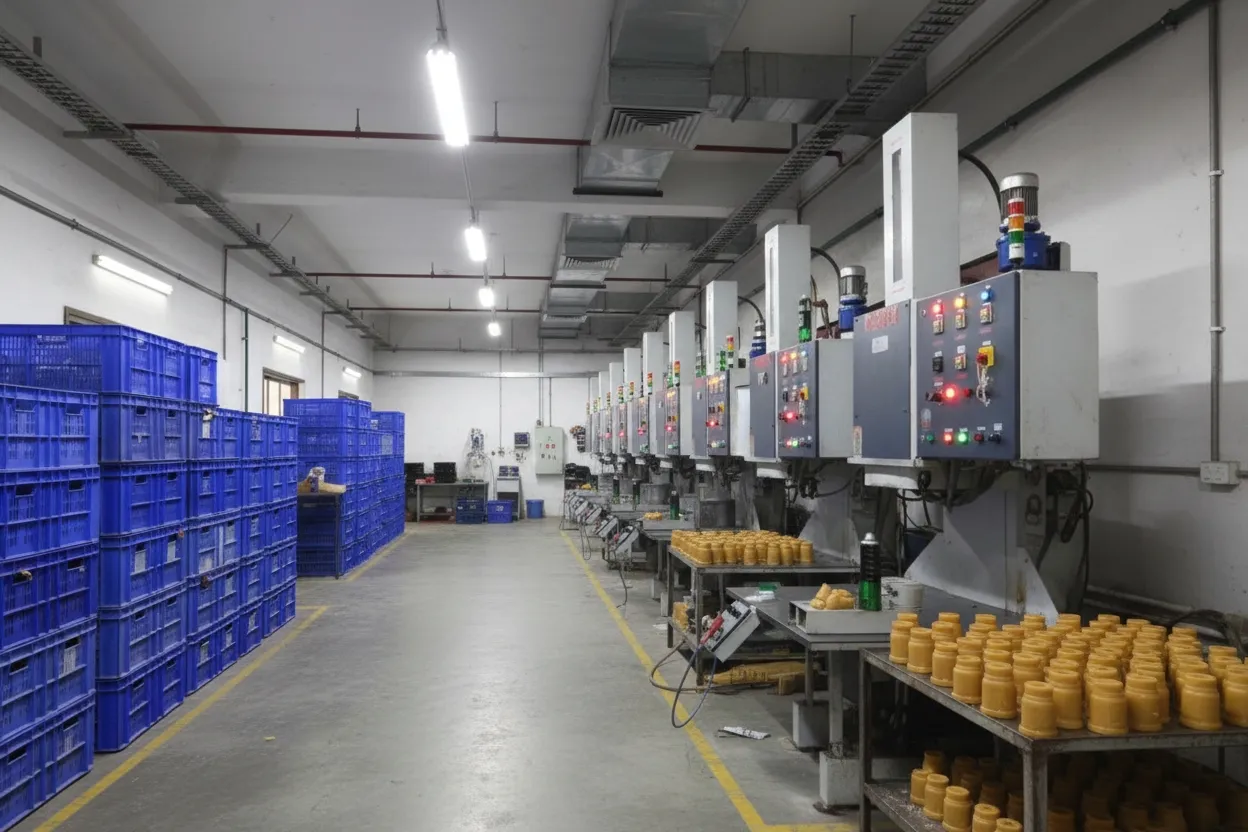
Pattern Injection: We use high-precision wax injection machines to create accurate wax replicas of your components.
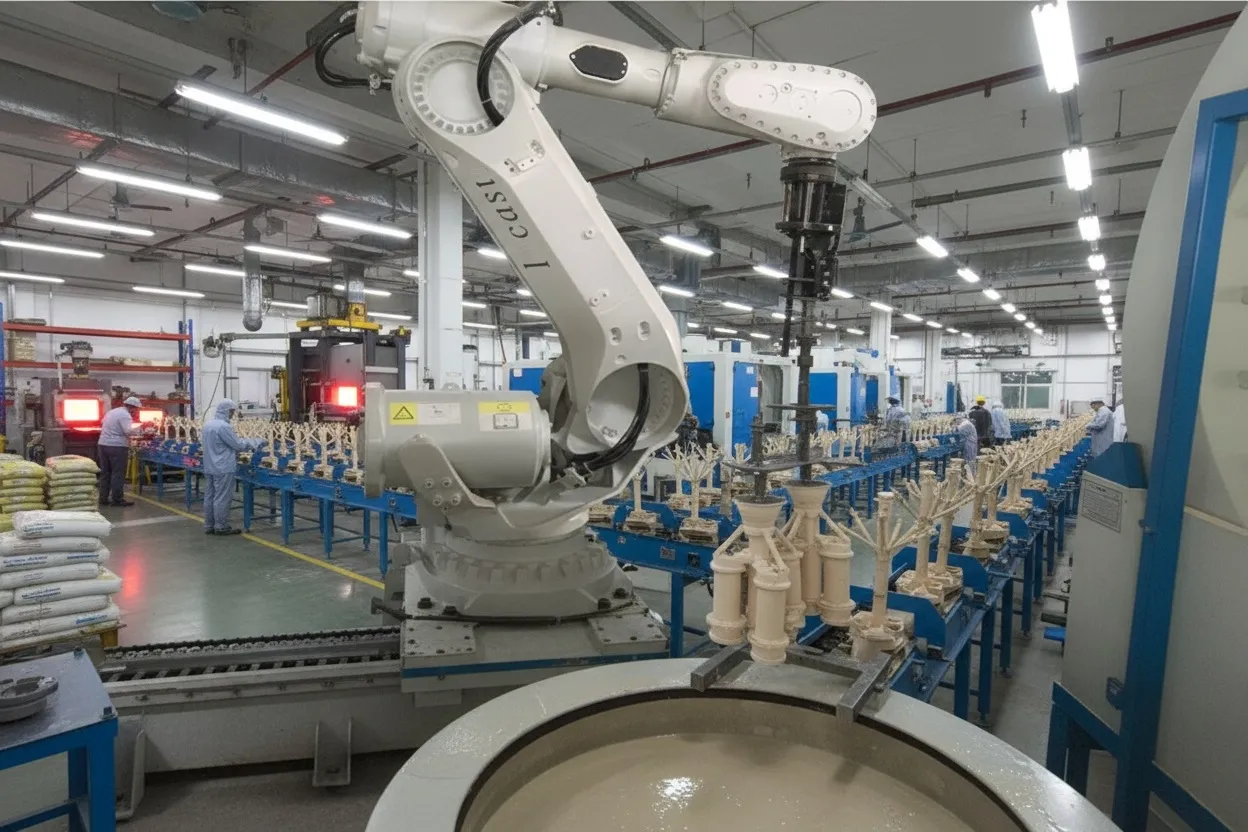
Tree Assembly: Wax patterns are expertly assembled onto a runner system (sprue) to create a "casting tree," optimizing the yield per pour.
Ceramic Shell Building: The assembly is dipped into high-grade ceramic slurry and coated with stucco sand. This process is repeated multiple times in a temperature and humidity-controlled environment to ensure shell integrity.
Dewaxing: Using advanced steam autoclaves, we remove the wax, leaving behind a high-strength ceramic mold.
Melting & Pouring: Our induction melting furnaces allow for precise temperature control. We pour molten metal into pre-heated shells to ensure complete filling of thin walls and fine details.
Knock-out & Finishing: After cooling, the ceramic shell is removed. Parts undergo shot blasting, gate removal, and grinding to achieve the final desired finish.
Our workshop is outfitted with modern machinery to ensure consistency and scalability:
| Feature | Specification / Detail |
| Material Range | Stainless Steel, Carbon Steel, Alloy Steel, Nickel-based alloys, and Cobalt alloys. |
| Weight Range | From 10 grams up to 50 kilograms. |
| Surface Finish | Achievable up to 3.2 to 6.3 microns Ra. |
| Production Capacity | Scalable from prototype batches to high-volume production runs. |
At ICAST ALLOYS LLP, quality isn't just a final check—it’s built into every step. Our in-house testing facility includes:
Spectrometer Analysis: To ensure the precise chemical composition of every heat.
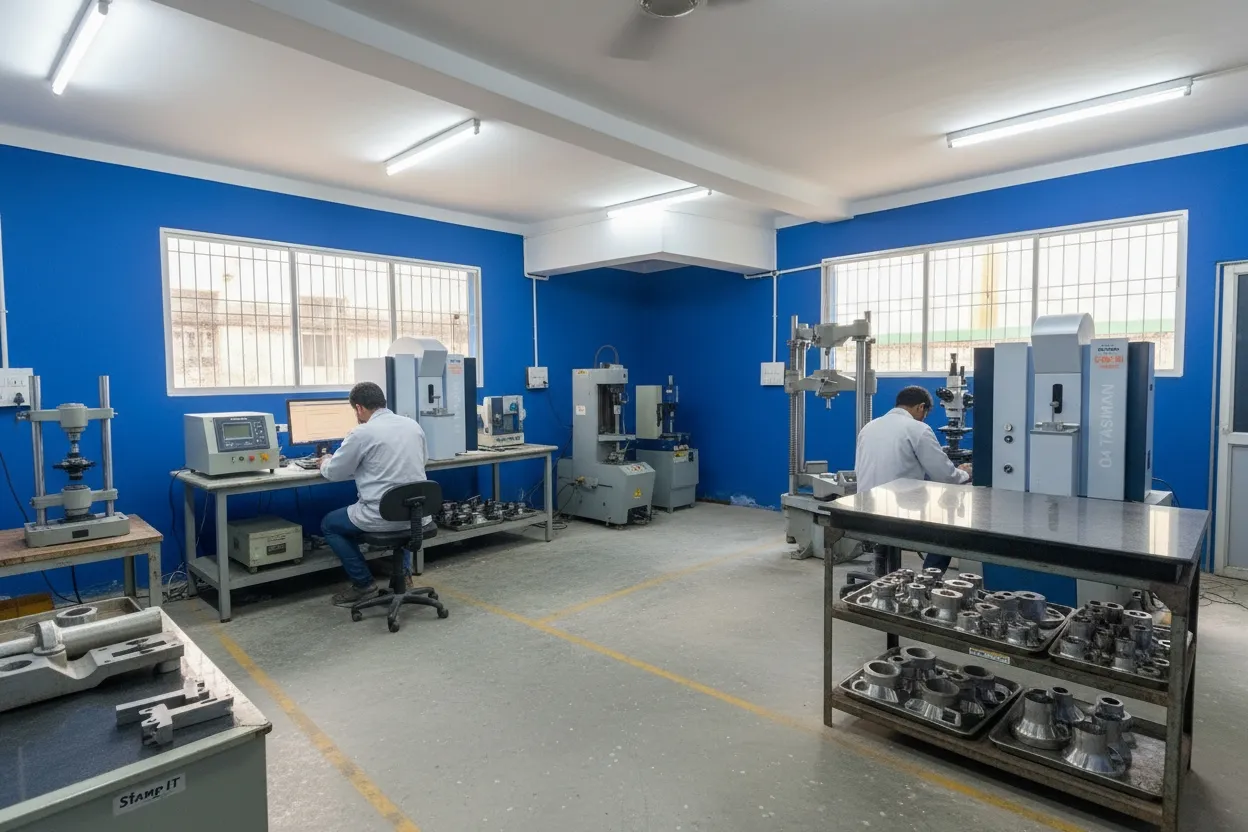
Dimensional Inspection: Using calibrated instruments and gauges to verify tolerances.

Non-Destructive Testing (NDT): Including Dye Penetrant Inspection (DPI) and Magnetic Particle Inspection (MPI) to detect surface defects.
Physical Testing: Hardness testing and microstructure analysis.
Design Flexibility: We can cast complex shapes that are impossible or too expensive to machine.
Material Efficiency: Near-net-shape casting significantly reduces raw material waste and secondary machining costs.
Quick Turnaround: Optimized workflows allow us to move from design to prototype rapidly.
