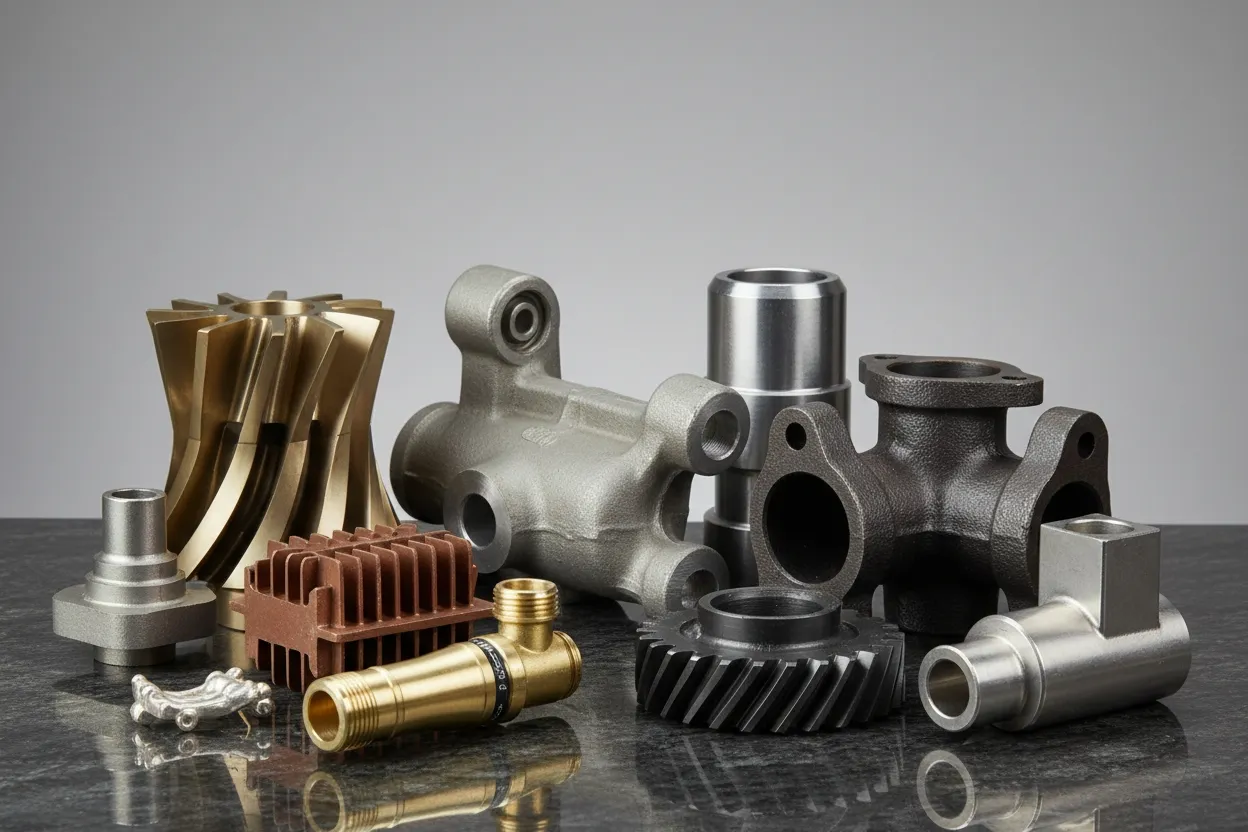
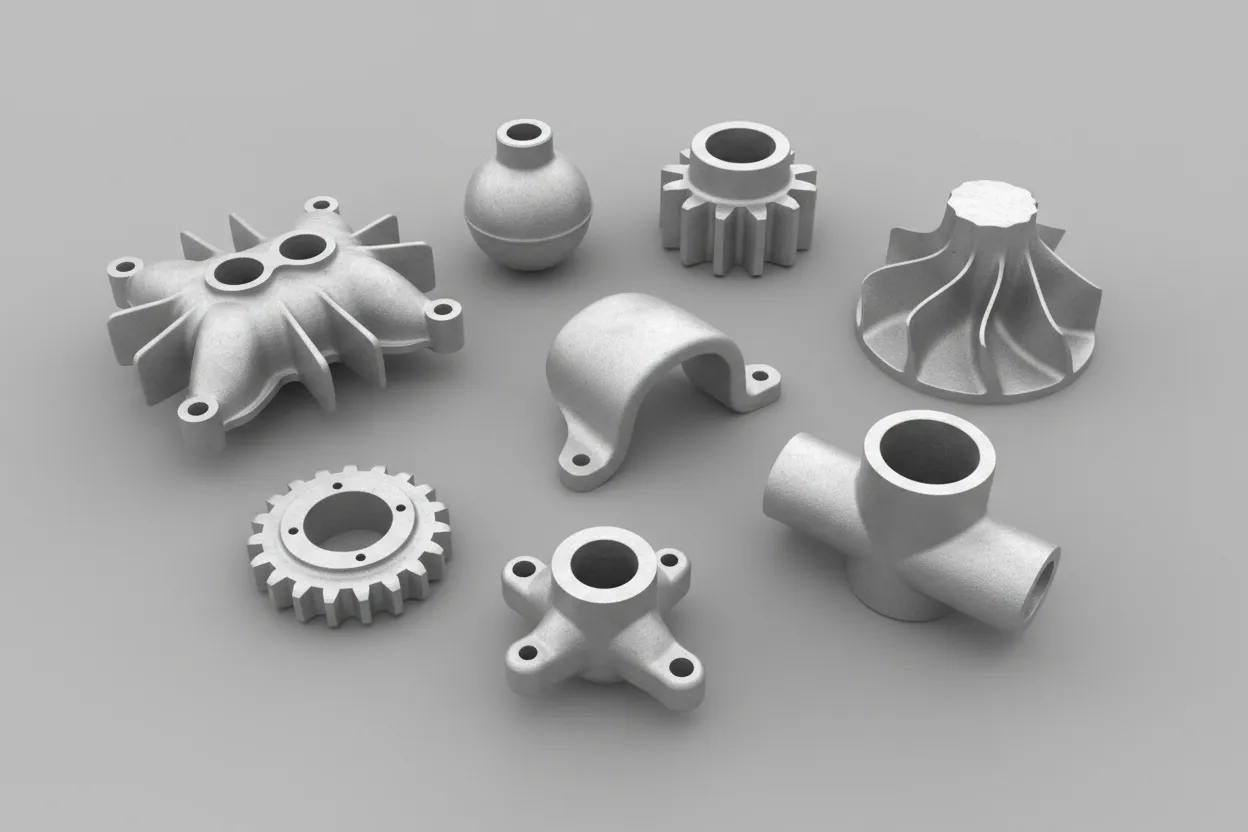
Aluminium investment casting (often called "lost-wax casting") is used to create complex, near-net-shape components that require excellent surface finishes and thin-walled structures. At ICAST, we leverage state-of-the-art facilities to produce parts that serve as lightweight alternatives to stainless steel and other heavier alloys.
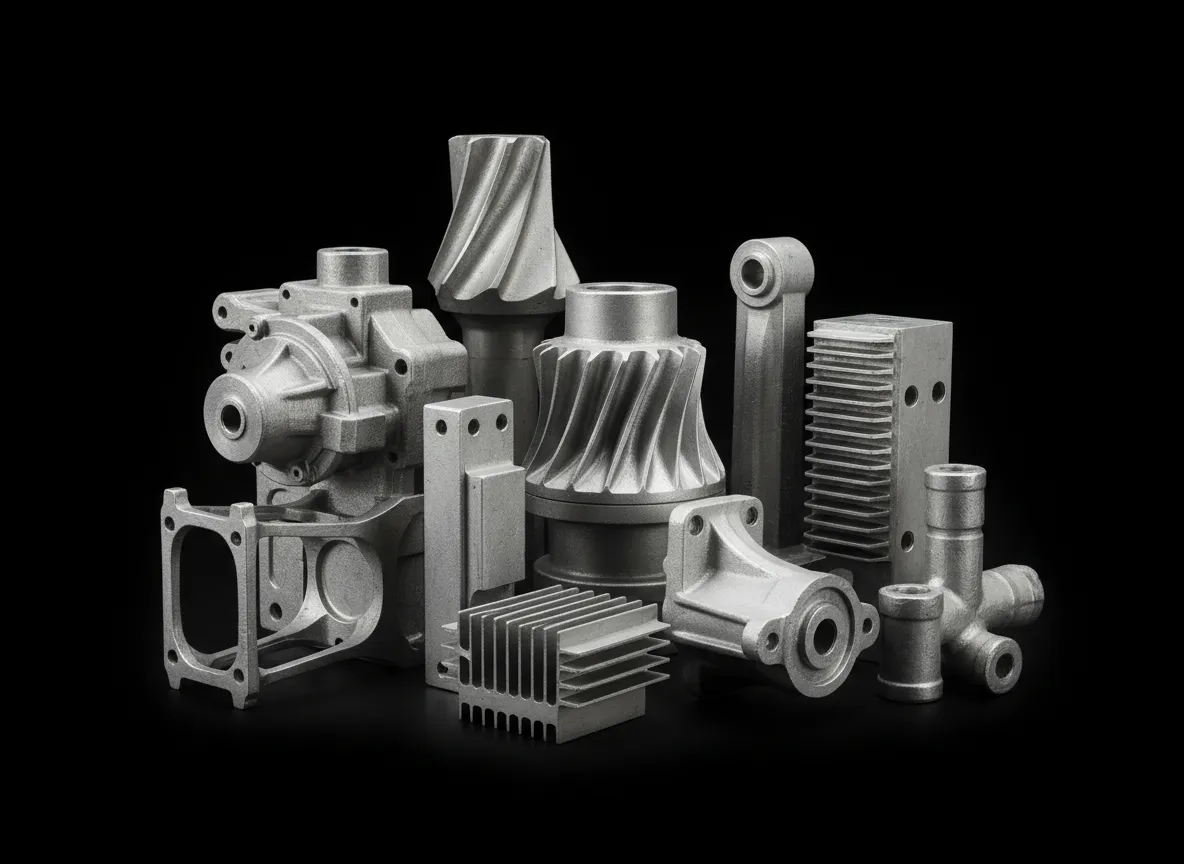
Aerospace & Defense: Turbine blades, structural housings, and lightweight airframe components
Automotive: Engine crankcases, intake manifolds, cylinder heads, and water pump housings
Industrial Valves: Globe valves, check valves, and high-pressure pump impellers
Medical: Surgical instrument bodies and specialized diagnostic equipment housings
Electronics: Heat sinks and protective casings for sensitive consumer electronics.
A356 / AS 356
6063 / AS 6063
2XXX Series (Al-Cu)
4XXX Series (Al-Si)
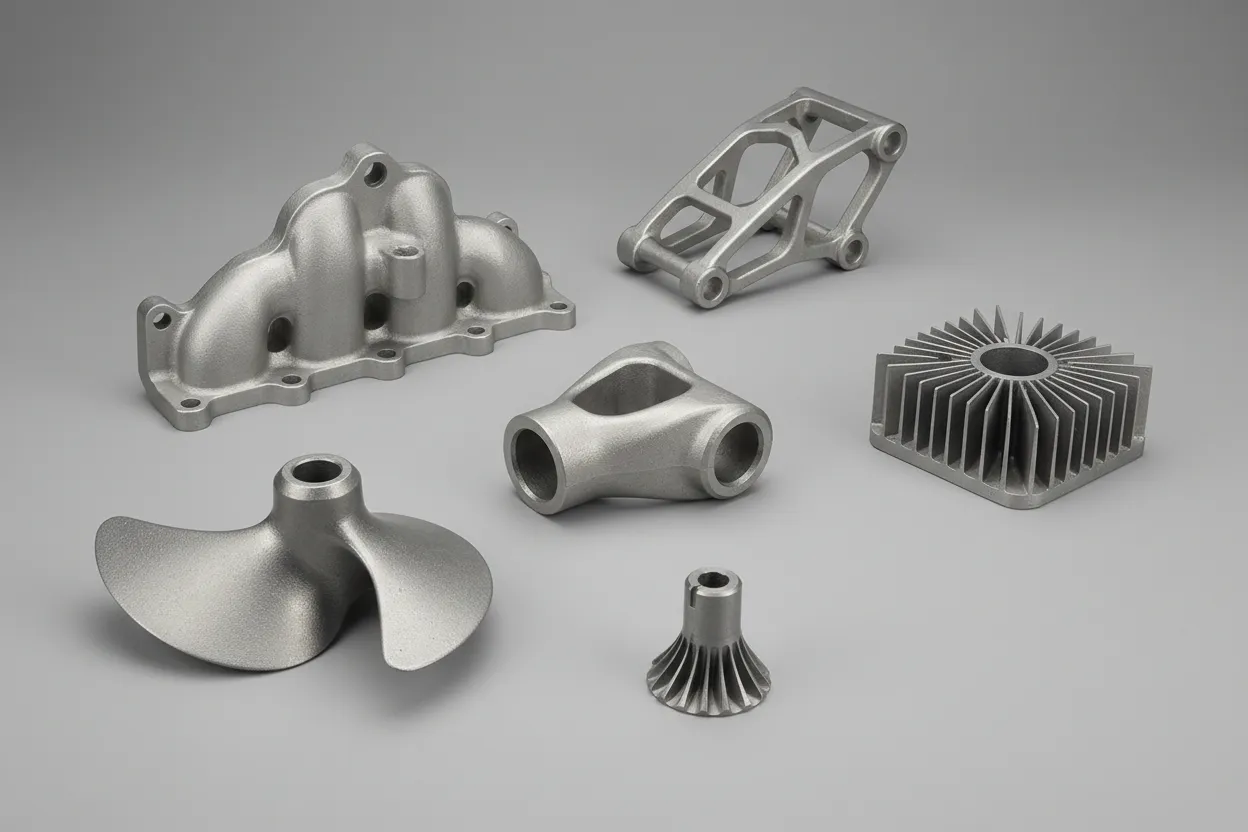
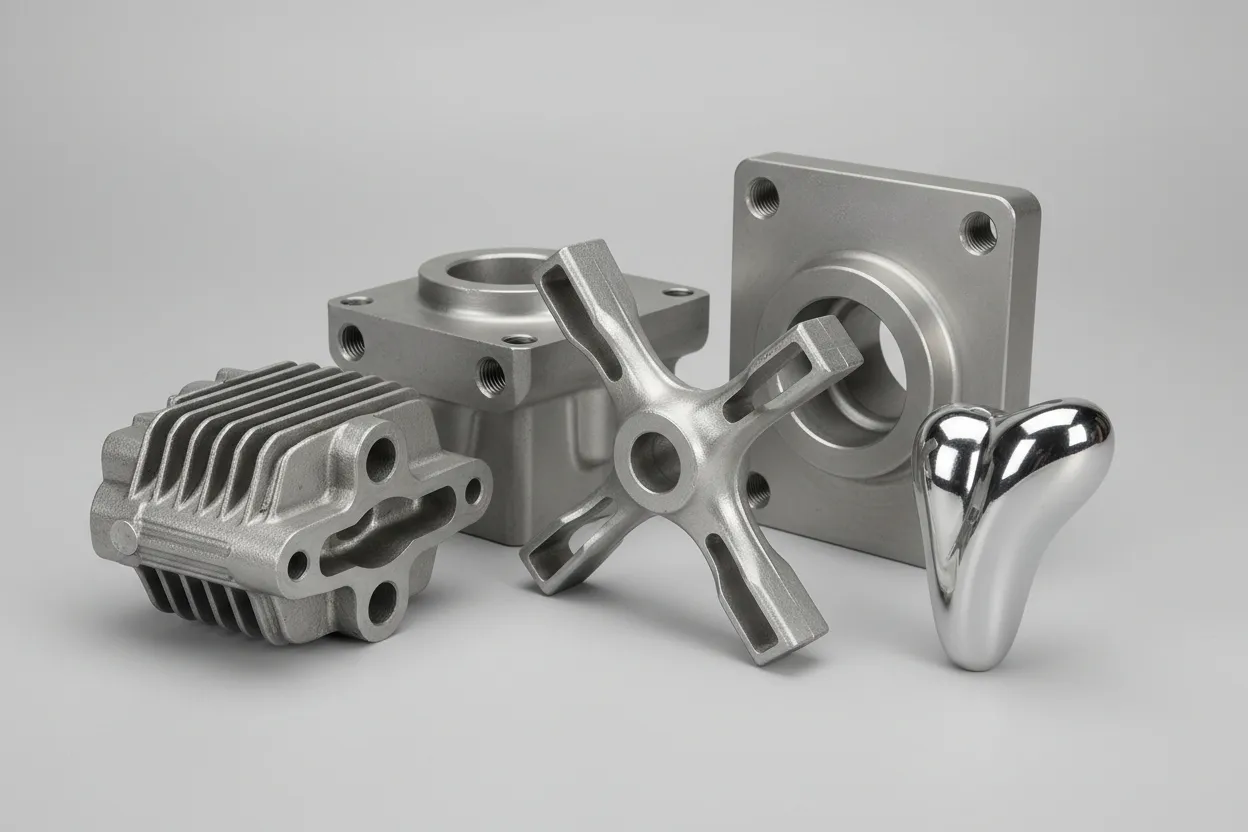
A356 / AS 356: The "workhorse" of the industry. It contains silicon and magnesium, offering excellent castability, high strength, and corrosion resistance. It is often heat-treated to a T6 condition for maximum durability
6063 / AS 6063: Frequently used for general engineering and architectural applications due to its excellent surface finish and response to anodizing
2XXX Series (Al-Cu): Prized for high strength and machinability, often used in aerospace and high-stress industrial environments.
4XXX Series (Al-Si): Known for its low melting point and high fluidity, making it ideal for intricate, thin-walled designs
Lightweight: Aluminium is approximately one-third the weight of steel, making it vital for fuel efficiency in transport and ease of handling in tools
High Precision: Achieve tight linear tolerances (up to ±0.005 inch/inch) and complex geometries that other methods cannot match
Corrosion Resistance: Aluminium naturally forms a protective oxide layer, making it ideal for marine and chemical environments
Superior Finish: Provides a smooth surface (100–125 RMS) that significantly reduces or eliminates the need for secondary machining
Thermal/Electrical Conductivity: Excellent for heat dissipation in power electronics and engine components.
Higher Initial Cost: The lost-wax process involves multiple steps (wax injection, ceramic coating, dewaxing), which can be more expensive than sand casting for simple parts
Size Constraints: Investment casting is best suited for small to medium-sized parts. Very large components may require alternative methods like sand casting.
Lower Hardness: Compared to ferrous alloys, aluminium is softer (typically 50–60 HRC range), though heat treatment (T4, T6) can significantly bridge this gap
As a Trustseal Verified manufacturer, ICAST ALLOYS LLP provides more than just a casting. We offer:
Casting Simulation: Utilizing advanced software to predict and eliminate defects before production
In-House Testing: Comprehensive chemical and mechanical testing to ensure every batch meets your material data sheet requirements.
Value-Added Services: Precision machining, powder coating, and specialized heat treatments (T2 to T6).