
Investment casting, also known as lost-wax casting, is one of the oldest and most precise metal-forming techniques. It is favored for its ability to produce complex geometries with exceptional surface finishes and tight tolerances.
Here is a step-by-step breakdown of the industrial investment casting process.

The process begins with the creation of a wax pattern. This is typically done by injecting wax into a metal die (mold) that has been precision-machined to the dimensions of the final part. Because wax shrinks as it cools, the die is designed to be slightly larger than the final product.
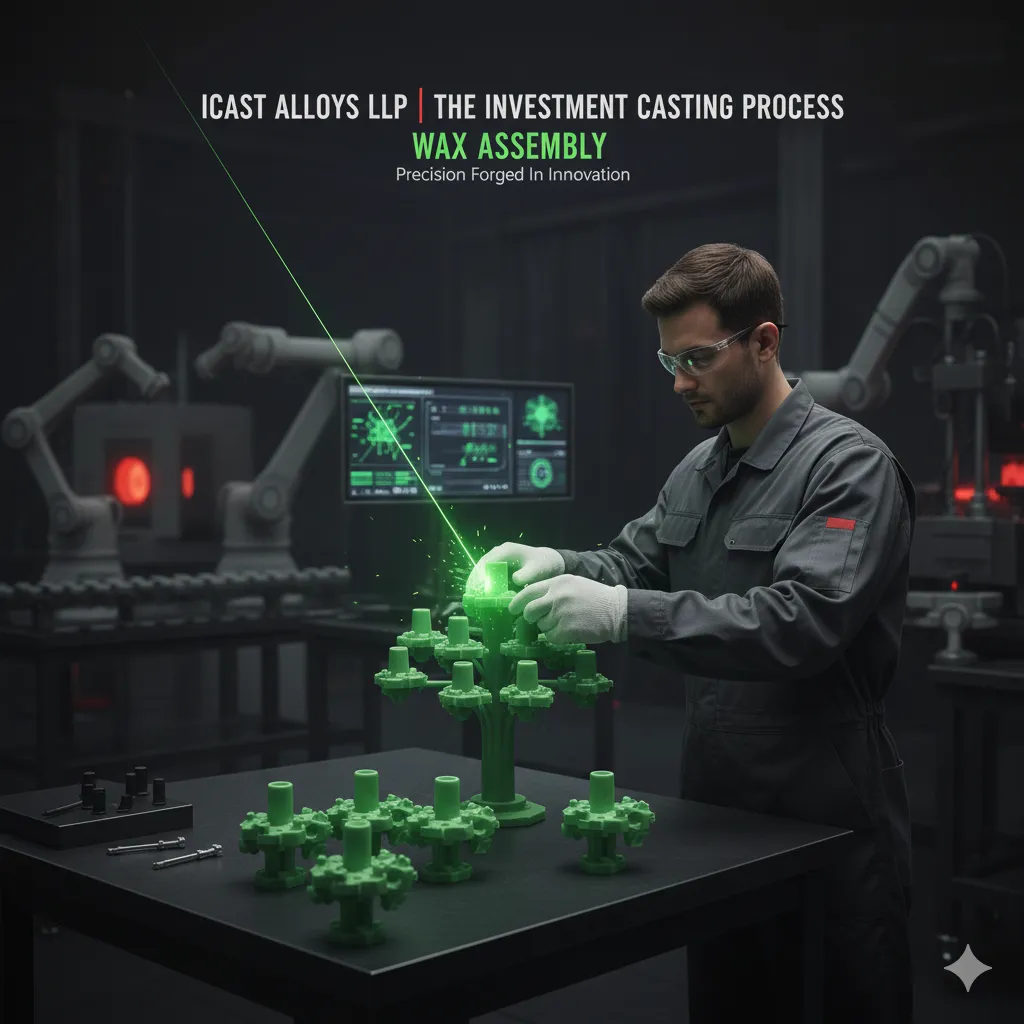
To maximize efficiency, multiple wax patterns are attached to a central wax "sprue" or runner. This creates a pattern tree, allowing many parts to be cast simultaneously in a single mold.
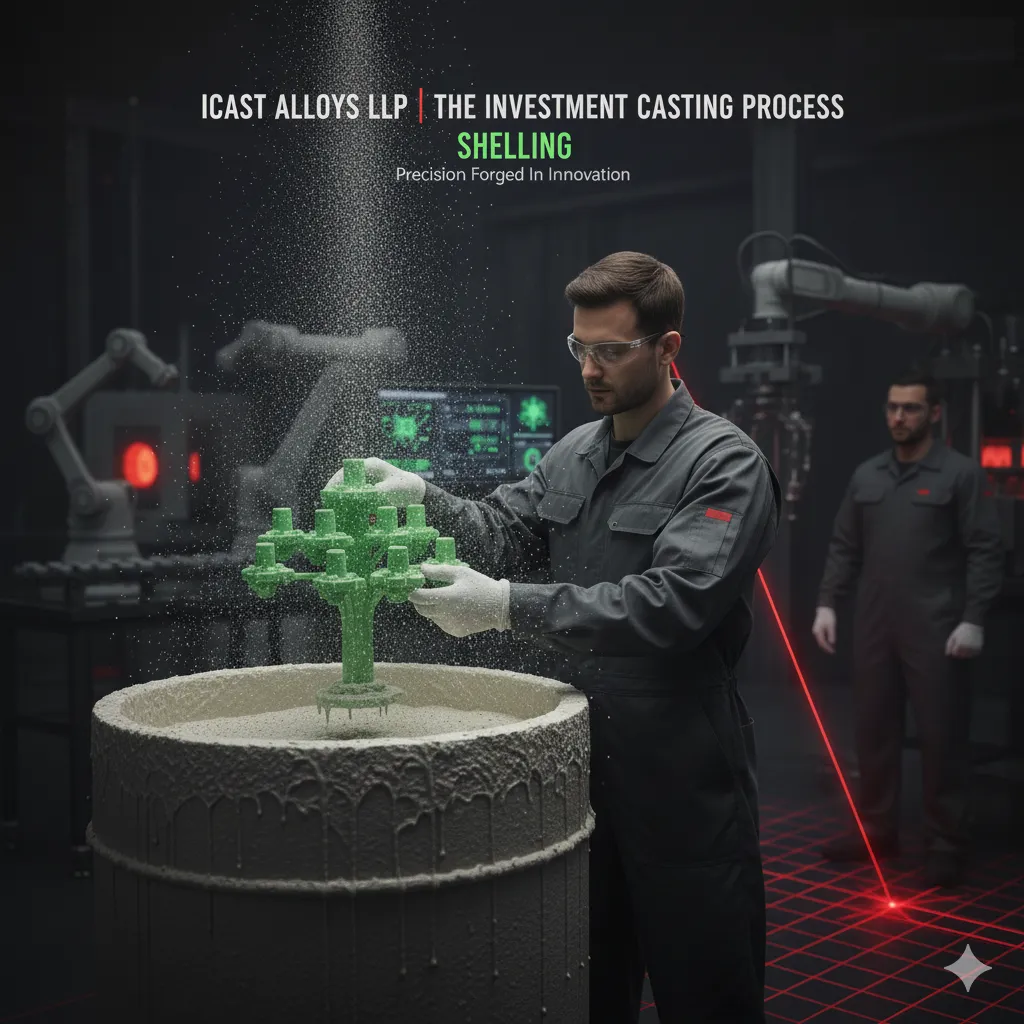
The wax assembly is dipped into a high-grade ceramic slurry and then immediately coated with fine sand (stucco). This process is repeated several times—allowing the layers to dry between dips—until a thick, high-strength ceramic shell is formed around the wax.

Once the ceramic shell is dry, it is placed in an autoclave or flash-fire furnace. The heat melts the wax, which drains out of the bottom of the shell, leaving a hollow cavity that perfectly matches the shape of the original patterns.

The empty ceramic shell is heated to high temperatures (often between 500°C and 1000°C). This strengthens the ceramic and prevents the molten metal from cooling too quickly. Molten metal is then poured into the preheated shell.

After the metal has solidified and cooled, the ceramic shell is broken away through mechanical vibration, water blasting, or chemical leaching. This process is known as knockout.
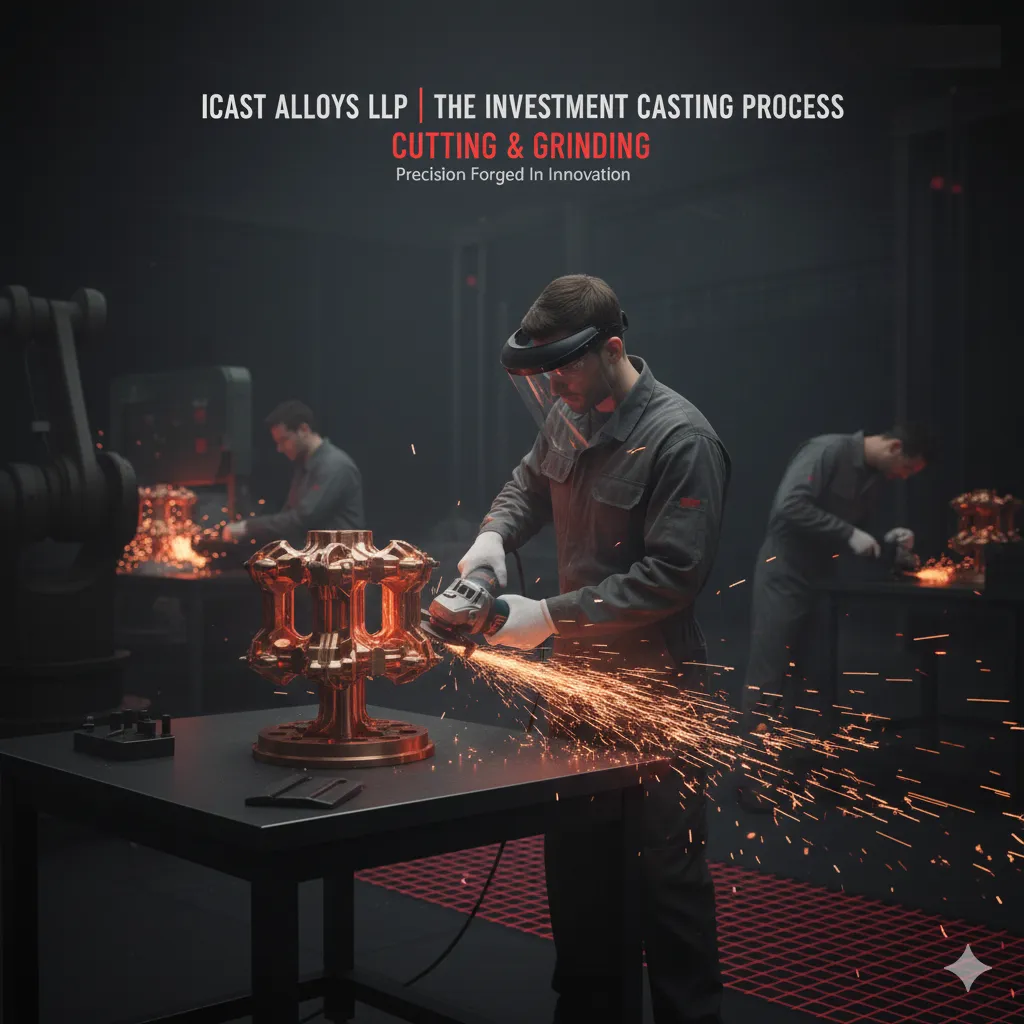
The individual metal parts are cut away from the central sprue. Any remaining gates or imperfections are ground down. Depending on the requirements, the parts may undergo:
• Shot blasting for surface texture.
• Heat treatment to improve mechanical properties.
• Precision machining for ultra-tight tolerances.

Once the metal parts are separated from the "tree," they undergo a series of finishing and corrective steps to ensure they match the client's specifications.

Before dispatch, parts undergo rigorous testing to ensure both surface integrity and internal soundness.

The final stage ensures that the precision-crafted parts arrive at their destination in perfect condition.
